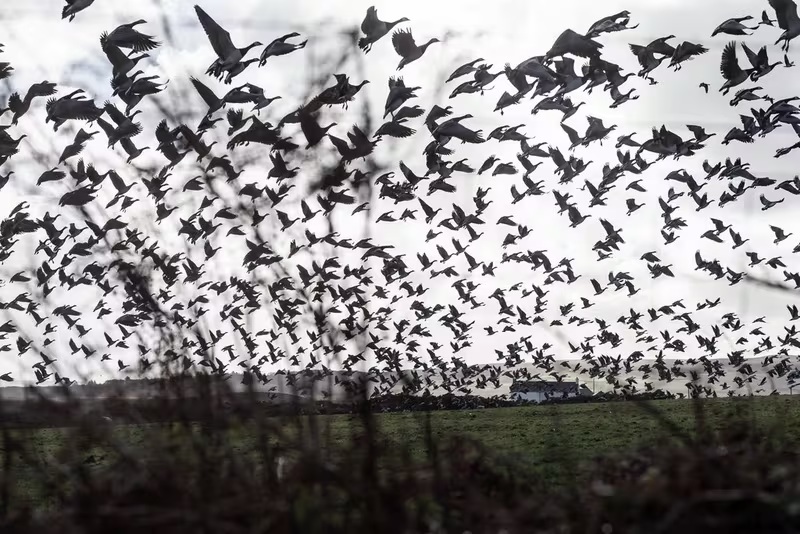
Over the following two decades, I became a regular visitor, immersing myself in the island's close-knit community. I supported several charitable fundraising initiatives, rowing, sailing and walking around Islay and even crossing the channel to Northern Ireland, collecting whisky from many of the island's distilleries to be bottled and sold for charity. Using my skills as both a photographer and graphic designer, I documented these remarkable events and designed bottle labels that helped raise funds for organisations including Children's Hospice Scotland and the Royal National Lifeboat Institution (RNLI). My continued visits and commitment to the island gradually earned me acceptance within the community, a privilege I never took for granted.
Building a personal body of work through visual storytelling
By late 2013, after countless visits, I had built a growing collection of portraits, landscapes, seascapes and wildlife photographs that captured both the spirit of the island and the character of its people. I made a conscious decision to invest in it as a photography passion project, driven by a desire to tell the story of a place that had become deeply personal to me. As the body of work grew, I began sharing it on social media, including Instagram, Facebook and LinkedIn. The response was overwhelmingly positive and eventually caught the attention of the Large Format Print marketing team at corporate brand Canon Europe. They saw my work as something that aligned to their brand values and business focus; a powerful demonstration of Canon's capture-to-print capabilities, and that interest soon led to a commercial commission.
Why authentic photography attracts attention
My passion project had become paid work. But why? I believe the photographs resonated because they were honest. Working predominantly with Canon prime lenses at very shallow depths of field and using natural, atmospheric light had become my signature style of visual storytelling. There was a truthfulness to the images: a grit and grain that some described as gloomy, but which, to me, simply reflected the reality of how I experienced the island and its inhabitants.
There had been no client brief, no art direction and no external influence—only intuition, emotion and years of dedication. I followed my instincts, trusted my vision and ignored the inevitable criticism. I wasn't trying to create work that everyone would like; I was creating the pictures I felt compelled to make and telling the story I believed needed to be told.
When a passion project leads to commercial opportunities
Over the next few years, through multiple return visits, the portfolio continued to grow, as did its audience online. Then, in 2016, I received what remains one of the greatest validations of my career. My agent, Mark George, called from London with exciting news. He had just received a call from the marketing department at Louis Vuitton Moët Hennessy (LVMH) in Paris. They had discovered my Islay work on LinkedIn. LVMH owns Ardbeg, one of the world's most iconic whisky brands, and they believed the atmosphere, authenticity and visual language of my Islay photographs perfectly reflected the character of the brand. It was one of those genuine 'pinch yourself' moments. The world's largest luxury goods company wanted to commission me to photograph one of its most prestigious brands. Better still, they were going to pay me to return to an island that had become a second home.
Maintaining creative freedom in client photography work
Perhaps the most rewarding aspect was that they wanted me to do what I already did. While I received briefs identifying particular locations, people or stories, they respected my creative vision and trusted me to interpret the work in my own way. That freedom allowed the project to retain its integrity, and the relationship continued for the next four years. Every trip was creatively fulfilling and personally unforgettable.
Life lessons from an experienced commercial photographer
The experience taught me one of the most important lessons of my career: don't wait for opportunities to arrive. Create them. Follow your instincts. Invest in the work that matters to you. Share it with the world. The saying, "If you build it, they will come," may sound simplistic, but my experience suggests there is truth in it. Equally, Steve Jobs' observation that "People don't know what they want until you show it to them" has always resonated with me. Passion projects allow you to show the world what only you can see. Of course, the work still needs to have relevance for potential clients. While I was following my creative instincts, I also had bills to pay, and my commercial work funded the project through the early stages. But I never viewed that time or money as a cost. It was an investment—one that was creatively rewarding, personally meaningful and, ultimately, professionally transformative.
Creating lasting value through personal photography projects
Looking back, I realise the greatest value of the project wasn't simply the commissions it generated. It was the legacy it created: a body of work that means something to me, to the people I photographed and, hopefully, to those who encounter the story for years to come.